Felipe Coimbra
Blogging About Your Client’s Ongoing Case? Get the Facts Right
Public court records may be discussed. But when lawyers representing one side choose to use an ongoing case as public-facing content, they should carefully distinguish what the court actually found from what their clients alleged or suspected.

Public court records may be discussed. But when lawyers representing one side choose to use an ongoing case as public-facing content, they should carefully distinguish what the court actually found from what their clients alleged or suspected.
I have deliberately avoided discussing an ongoing shareholder dispute publicly, partly because the parties share personal and professional contacts.
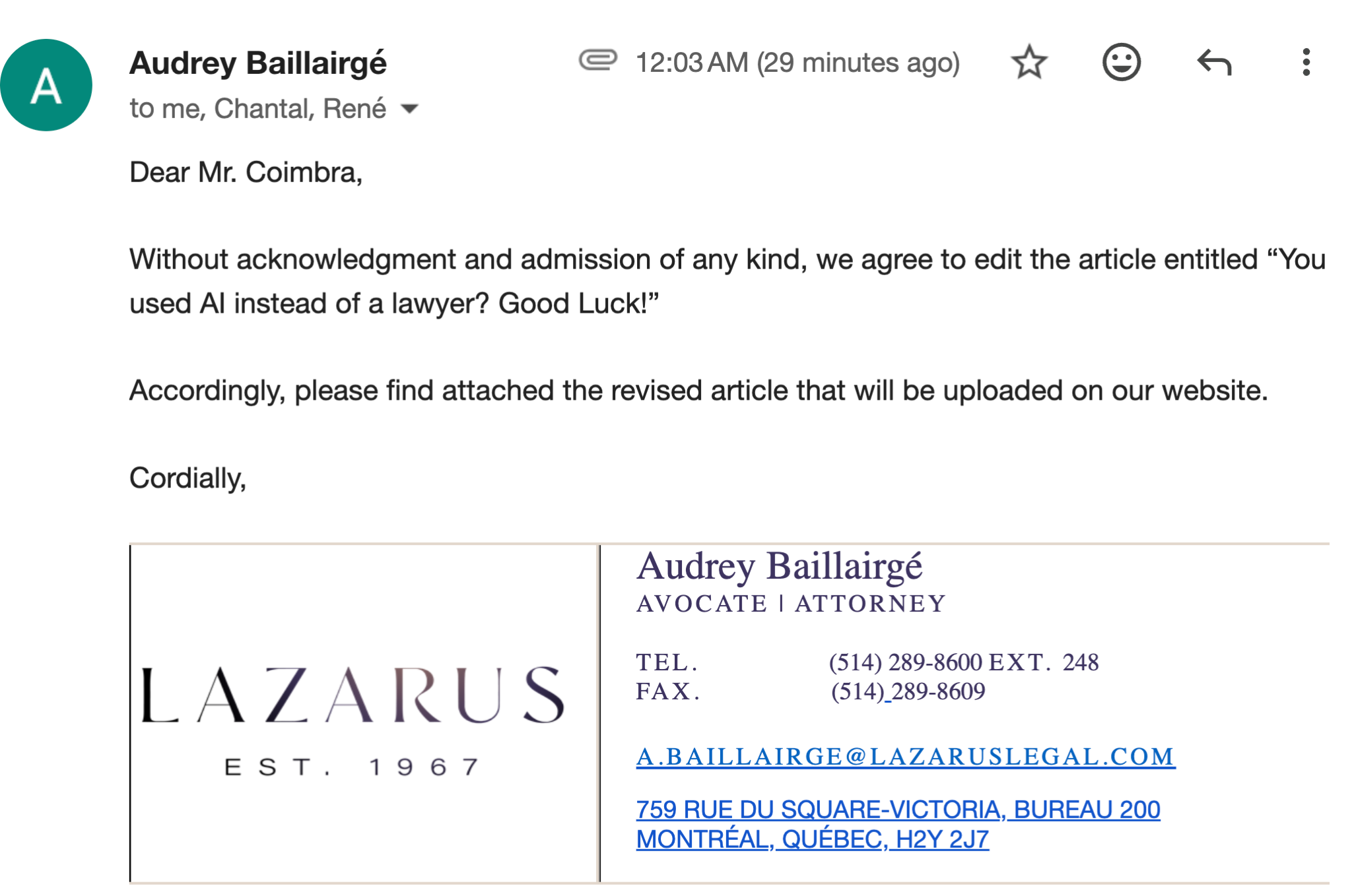
The law firm representing the defendants chose to publish an article identifying me and discussing two rulings from the case in a broader discussion about the misuse of artificial intelligence in court proceedings.
The original article described two of my proceedings as “AI-generated.” The distinction I raised was specific: that description was not a finding made in the two judgments cited.
At paragraph 55 of the June 4, 2025 judgment, the court recorded that the defendants suspected I used artificial intelligence to draft proceedings. Recording a party’s suspicion is not the same as accepting it as an established fact.
That distinction matters. Readers should be able to understand whether a statement comes from a judicial finding, a party’s position, or the author’s own interpretation.
I raised the issue privately. The article has since been revised to attribute the suggestion of AI use to the defendants’ suspicion. I welcome that change.
The revision does not change the court’s rulings or the criticisms expressed in them. My point is not to challenge those rulings through a blog post. It is that even an unfavourable ruling should be described accurately.
Accuracy is not owed only to litigants who succeed in every application.
The underlying dispute remains before the court, and I will address its merits there. This post concerns the public description of the judicial record—not an invitation to decide the case on social media.