Felipe Coimbra
Codex Cloud, and a Week of Work Before Getting Out of Bed
Wake up, check the news, give Codex a few tasks. This morning, that familiar phone habit made me rethink what a week of development work means.

This morning, before I got out of bed, I’d done more development work than would have taken me at least a week before AI. Think about that.
I’ve got into a habit: wake up, reach for my phone, check the news, then log into Codex remotely and give it a few tasks. The beginning looks like the usual morning scroll. Then, somewhere between the headlines and getting up, my projects start moving.
The timing feels appropriate. In its September 29 release notes, OpenAI introduced Codex Cloud: coding tasks you can start and continue from desktop, web, or mobile, with work able to carry on while your computer sleeps. That announcement puts a name to a shift I’m already feeling in my own routine.
Before AI, each task needed a stretch of my undivided attention. I had to sit down, find my place in the code, figure out the change, implement it, and check it. A few tasks could easily fill a week around everything else.
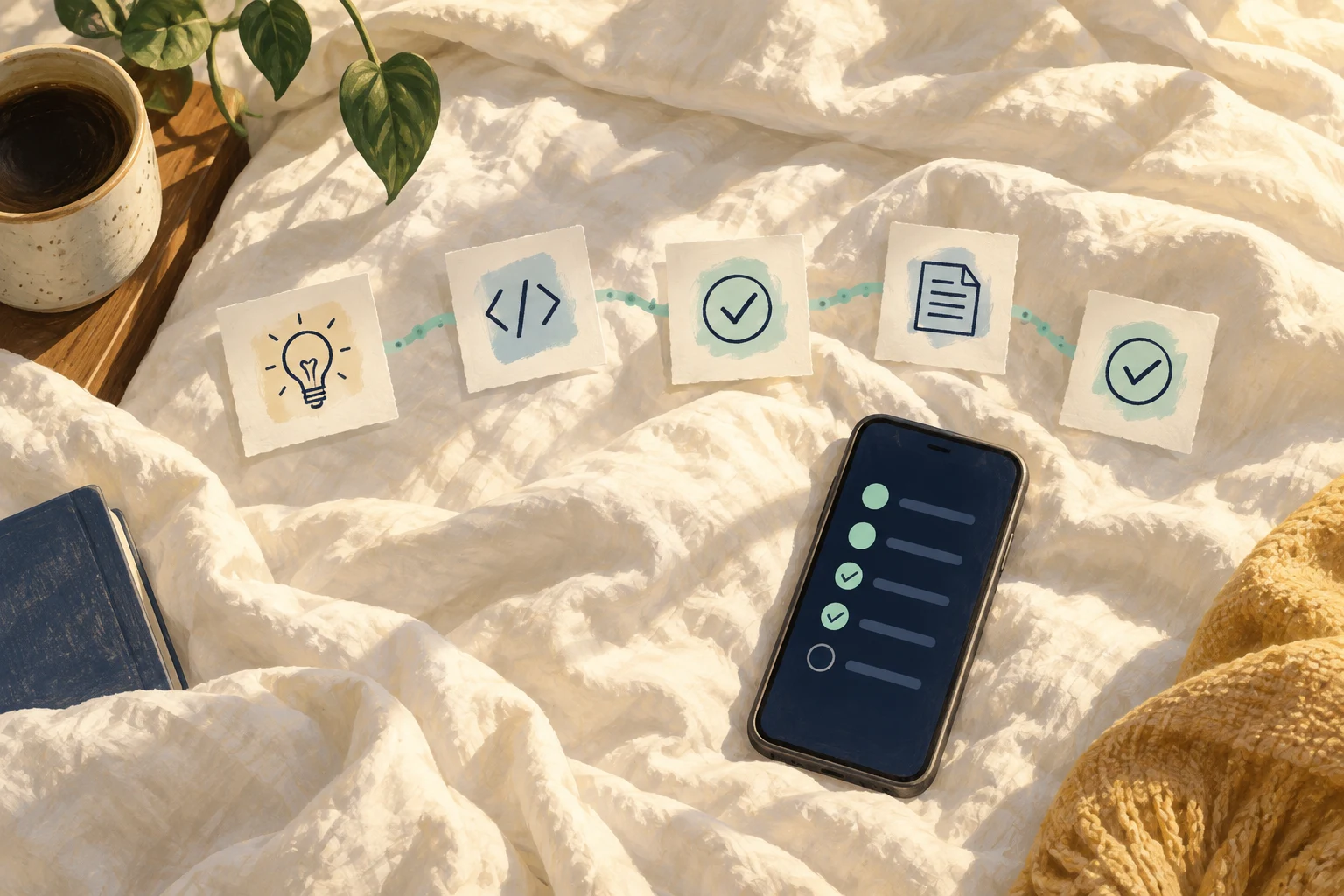
Now I can decide what matters, explain what I want, and set several pieces of work in motion from my phone. I still need to review the results and make the decisions. Giving a task is not the same as shipping it. But the distance between noticing something and making progress on it has become remarkably small.
“A week” is my comparison with how I used to work, not a productivity benchmark. Even with that qualification, it’s a strange thing to realize while you’re still under the covers.
I’m used to thinking about work in hours, days, and weeks. This morning made me wonder how much of that calendar was really the cost of doing every step myself.
For the projects I share here on Felipe.ai, I’m still figuring out what to do with that extra room. Build more? Finish the things I kept putting off? Get up, put the phone down, and enjoy more of the day?
Probably a little of all three.